English
 русский
 Español
 Deutsch

Content
- 1 Why the Gunite AS Series Became an Industry Shorthand
- 2 Decoding the Gunite Automatic Slack Adjuster Numbering
- 3 The Four Measurements That Decide a Match
- 4 A Working Cross Reference for the Most Common Gunite Numbers
- 5 How to Read Interchange Numbers From Other Brake Suppliers
- 6 Verify the Fit Before the Adjuster Goes On
- 7 Turning a Cross Reference Into a Sourcing Habit
Air Brake Components · Interchange Guidance
Gunite Automatic Slack Adjuster Cross Reference: What the Numbers Really Mean
One seized adjuster can ground a truck for the morning. When the old casting reads AS1132 and the parts counter returns three possible equivalents, the next ten minutes decide whether the brake job is uneventful or turns into a second parts run. This guide explains how a gunite automatic slack adjuster cross reference works, which dimensions actually decide the match, and when to walk away from an interchange row.
Why the Gunite AS Series Became an Industry Shorthand
Gunite automatic slack adjusters have served as original equipment across a large share of North American trucks, tractors and trailers. That history is the reason their AS1xxx part numbers appear in almost every aftermarket interchange table: catalogs from Haldex, Euclid, Automann and dozens of private-label ranges list their own products against Gunite references, and a shop can usually turn an AS1132, AS1136 or AS1172 into a warehouse number within minutes.
The convenience carries a small trap. Cross-reference data is assembled by many suppliers, and an interchange row only proves that two companies decided to list their parts together. The physical specification is what survives on the vehicle — spline count, shaft diameter, arm length and clevis type. When those four numbers match the old unit, the part number becomes simple paperwork.
Decoding the Gunite Automatic Slack Adjuster Numbering
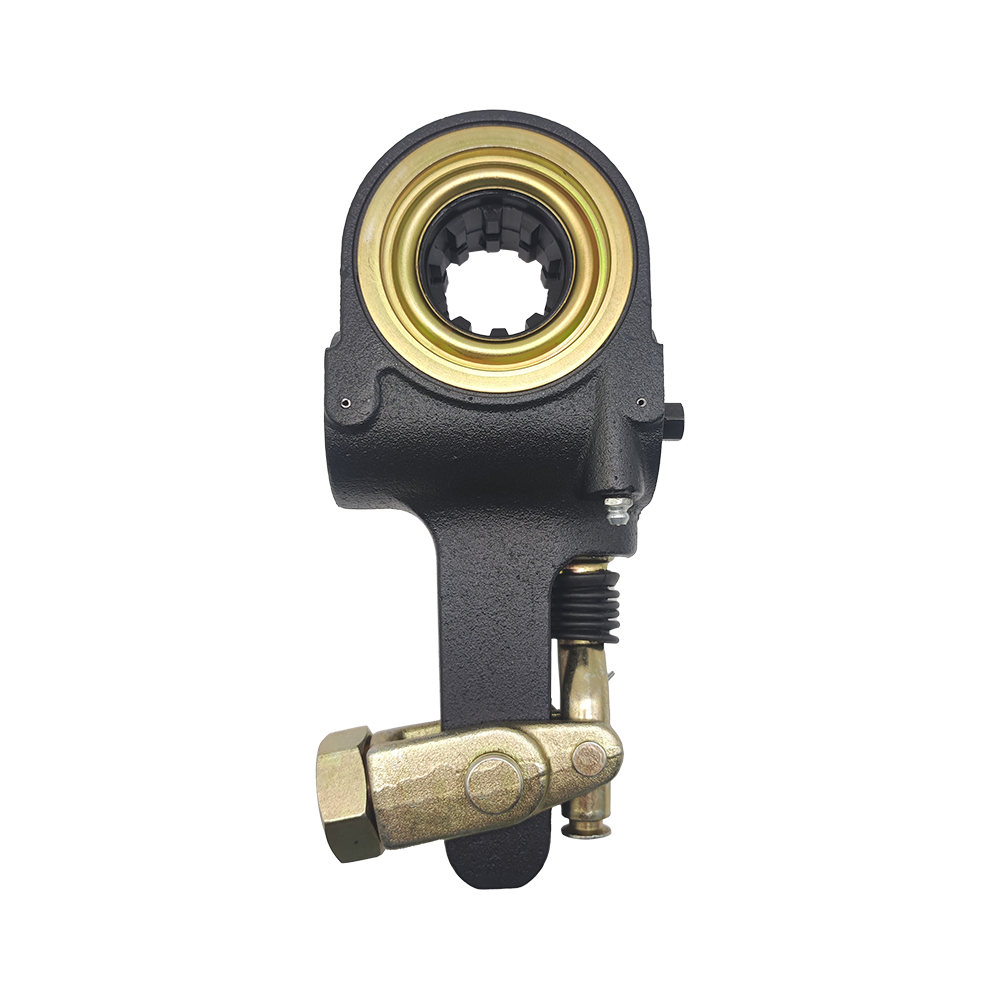
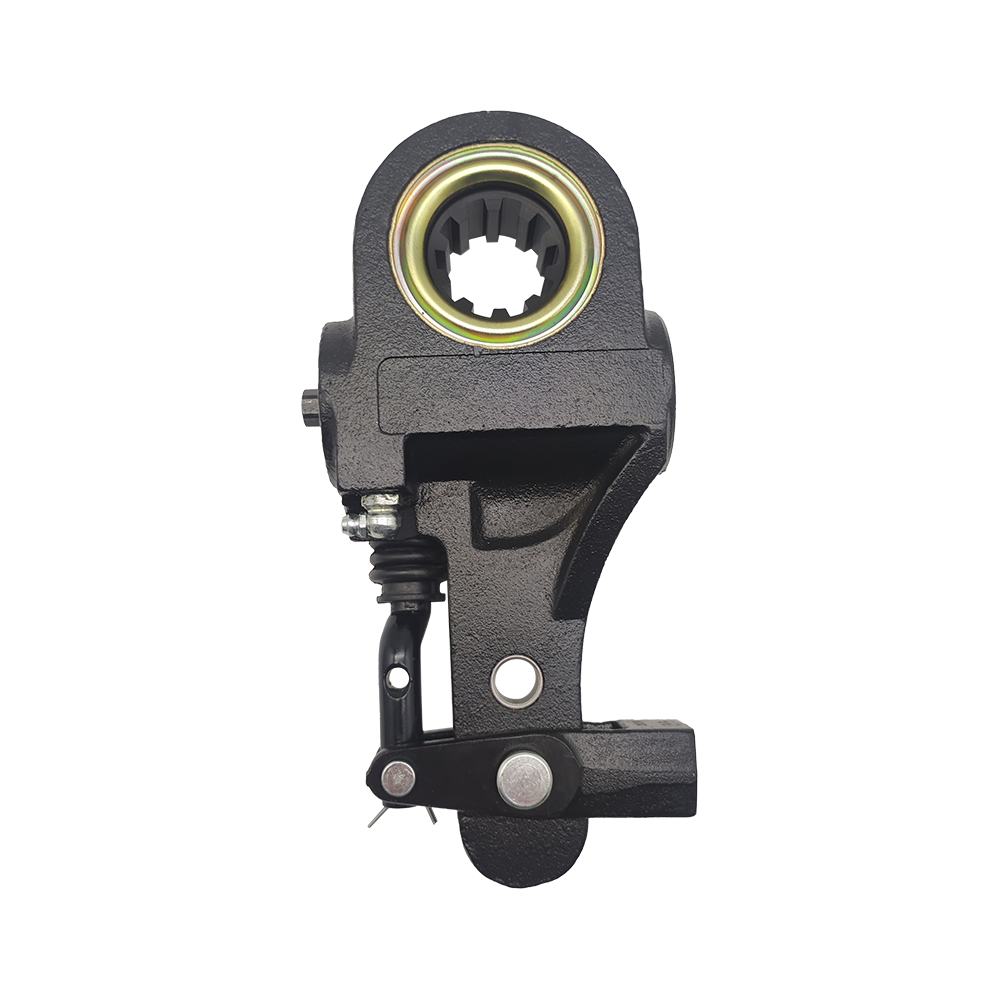
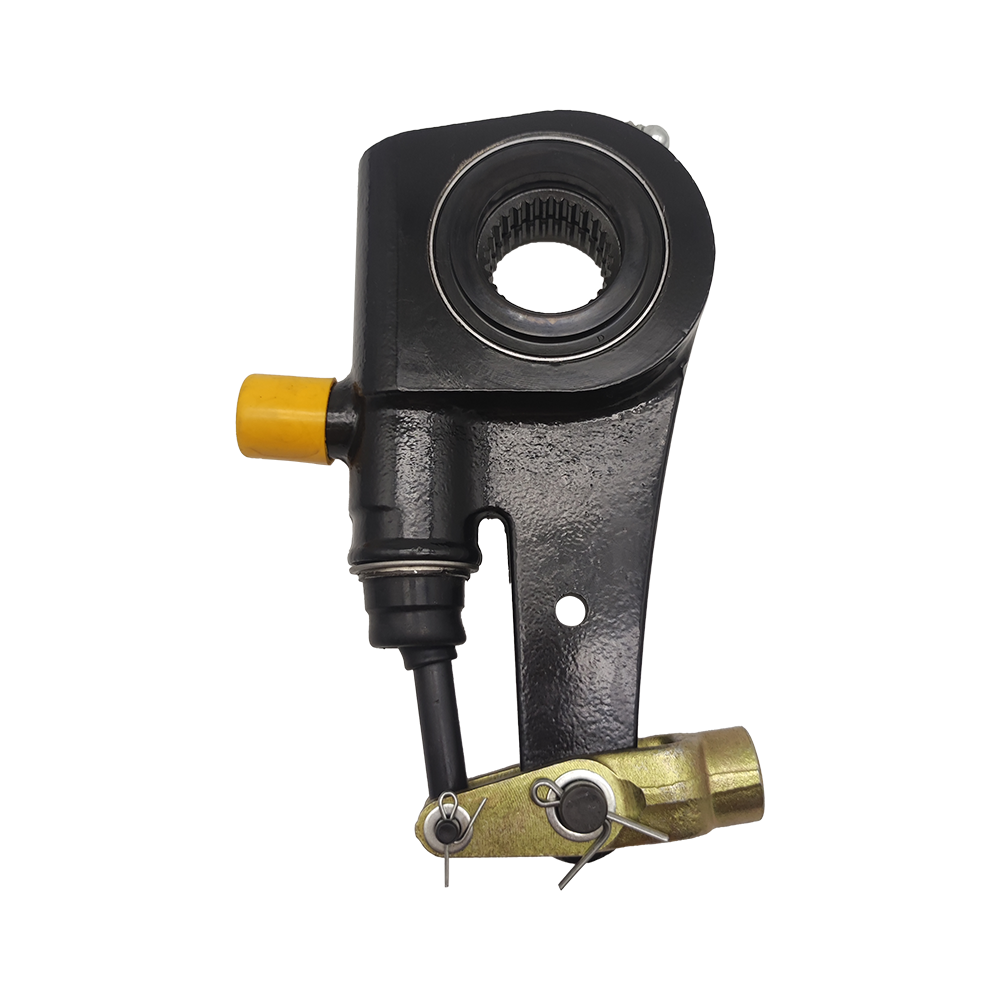
Gunite's automatic adjuster numbering follows a clear pattern. The AS1132 is the backbone of the line: a 10-spline unit with a 1.50-inch shaft diameter and a 5.5-inch arm, common on Freightliner tractors, trailer axles and a long list of vocational chassis. Any replacement claiming to fit the AS1132 must carry those three dimensions.
The AS1133 family sits just beside it. Interchange listings routinely pair AS1033 with AS1133, and place Euclid E15017 and Freightliner 764013506 in the same row. Both variants use the 10-spline, 1.50-inch shaft with a 5.5-inch arm, so they behave as a single interchange group.
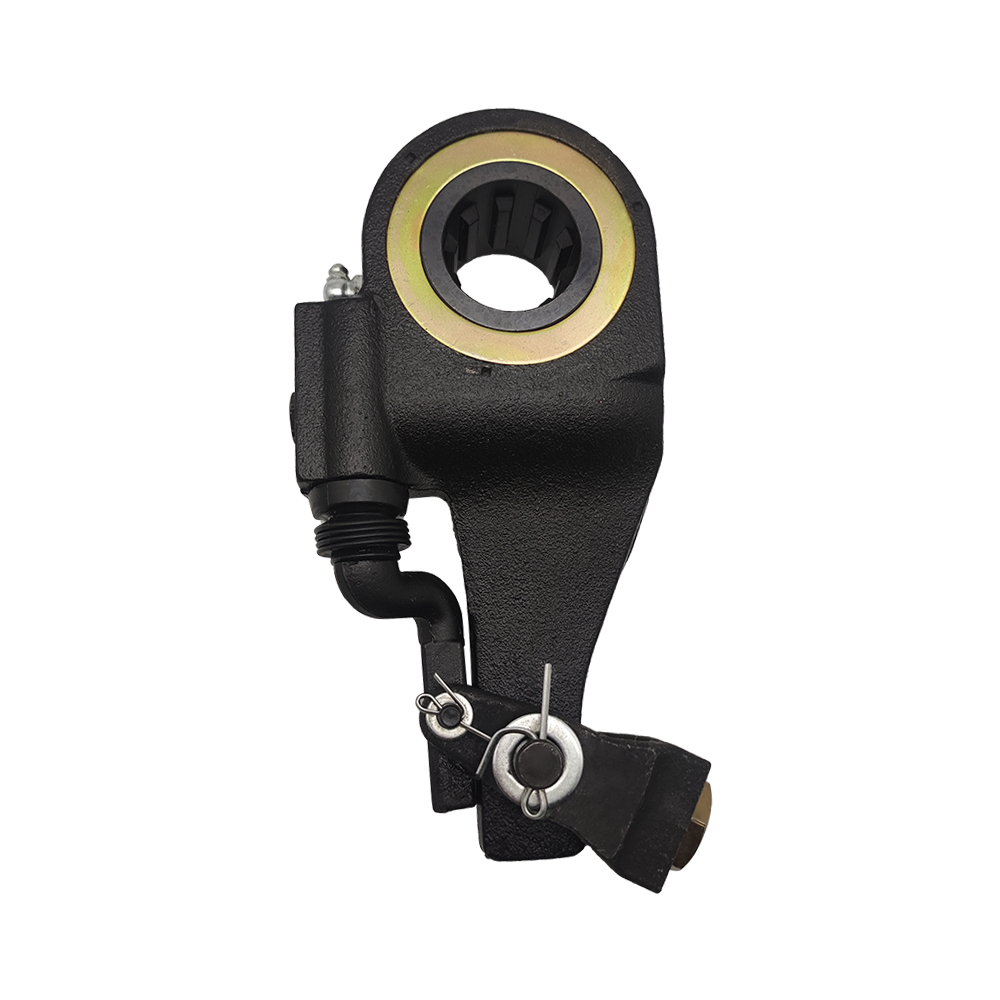
The AS1136 and AS1152/AS1153 group is a different animal: still 10 splines, but a 1.25-inch shaft diameter. Haldex 56036, Haldex CS56036 and Automann 138.1010 are the numbers most often listed beside this family. Mixing the 1.25-inch group with the 1.50-inch group is one of the most common ordering errors in the air brake business.
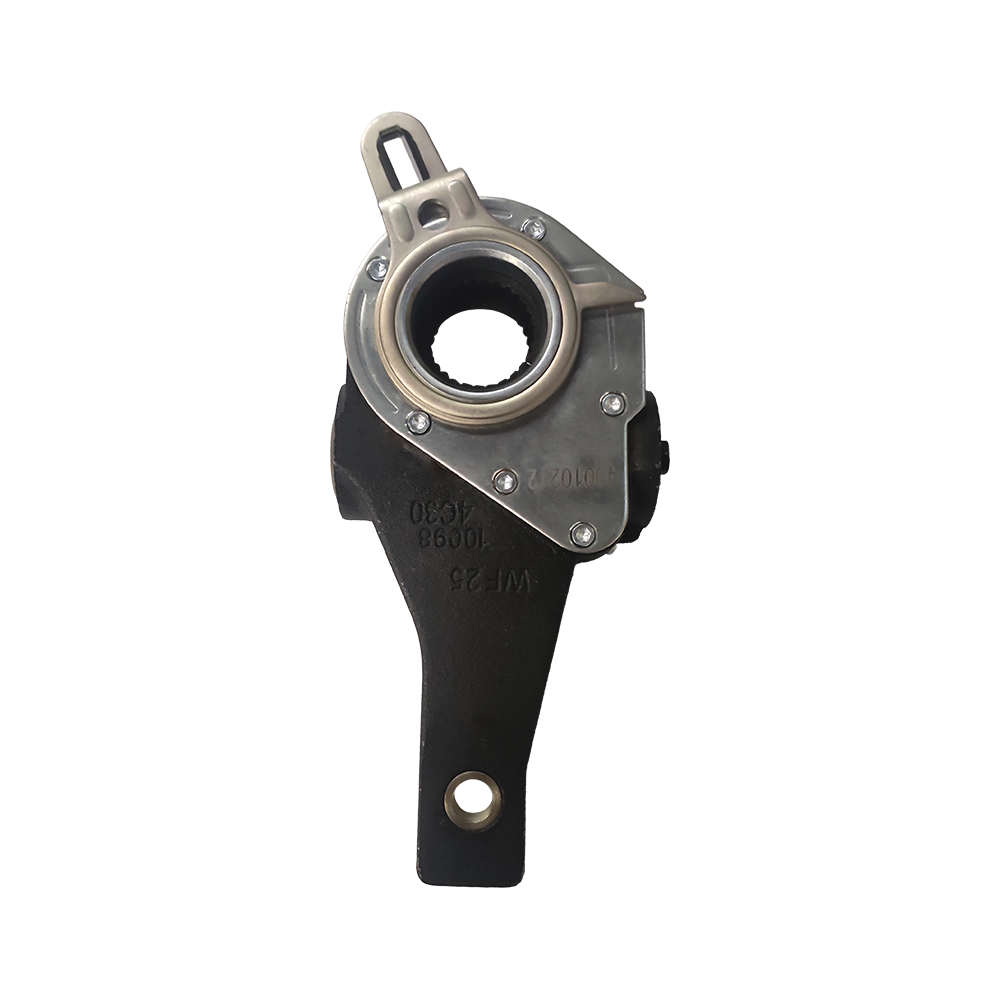
The 28-spline family completes the picture. AS1172 and SA11902 are both 28-spline, 1.50-inch units with a 5.5-inch arm, used mainly on Volvo VNL tractors and heavy vocational models. Volvo 20527307 and Euclid E15055 appear in the same interchange rows, which makes the family easy to identify once you know what the spline count means.
Part numbers say what the adjuster was built for. Spline count and shaft diameter say what it will actually fit.
The Four Measurements That Decide a Match
A cross reference narrows the search; a caliper makes the final decision. Four dimensions separate an interchangeable unit from an ornament on the shelf.
- Spline count and shaft diameter. The two standard American patterns are 10-spline and 28-spline, offered in 1.25-inch and 1.50-inch diameters. Count the teeth and measure the spline end squarely, not at the thread runout.
- Arm length. Measured from the center of the spline bore to the center of the clevis pin. A 5.5-inch lever has a different stroke ratio than a 6-inch lever, and the wrong one can put pushrod travel outside the inspection window.
- Clevis and thread. The clevis opening, pin bore and thread pitch must accept the existing pushrod. A metric-threaded welded clevis will not mix with an inch-standard yoke pin.
- Handedness and rotation. The adjuster must act on the pushrod in the same stroke direction as the original unit.
When all four agree, the replacement can be installed and evaluated with the standard stroke procedure. Internal differences between brands affect feel, damping and service life — not interchangeability.
A Working Cross Reference for the Most Common Gunite Numbers
The table below collects the equivalences most often cited in aftermarket catalogs. Treat it as a starting point for verification, not as a certificate of fit.
| Gunite Part No. | Spline x Diameter | Arm Length | Commonly Listed Interchanges | Typical Fitment |
|---|---|---|---|---|
| AS1033 | 10 x 1.50 in. | 5.5 in. | Gunite AS1133; Euclid E15017 | Freightliner, Volvo tractors |
| AS1132 | 10 x 1.50 in. | 5.5 in. | Commonly paired with AS1032 in interchange listings | Freightliner, trailer axles |
| AS1133 | 10 x 1.50 in. | 5.5 in. | Euclid E15017; Freightliner 764013506 | Kenworth, Peterbilt |
| AS1136 | 10 x 1.25 in. | 5.5 in. | Haldex 56036; Haldex CS56036; Automann 138.1010 | Freightliner, utility fleets |
| AS1152 / AS1153 | Grouped with AS1136 | 5.5 in. | Same interchange group as AS1136 | Mixed North American fleets |
| AS1172 | 28 x 1.50 in. | 5.5 in. | Automann 138.2810FC; Euclid E15055 | Volvo VNL |
| SA11902 | 28 x 1.50 in. | 5.5 in. | Volvo 20527307; AS1172 fitment | Volvo VNL 670 |
Notice how one row can hold several Gunite numbers. That is normal: manufacturers supersede castings without changing fitment. What is not normal is a row that claims to cover both 1.25-inch and 1.50-inch shafts — if you see that in a catalog, call the supplier.
How to Read Interchange Numbers From Other Brake Suppliers
Once the Gunite family is clear, the rest of the interchange table becomes predictable. Haldex numbers that start with 560xx belong to the 10-spline, 1.25-inch group. Euclid's E150xx series was built around the Gunite specification, which is why AS1033, AS1133, AS1172 and SA11902 all have direct Euclid equivalents. Automann's 138.xxxx range quotes the matching Gunite number in the description, and most private-label brands follow the same habit.
Bendix-style automatic slack adjusters use the same mounting standard, so a 6-inch Bendix-style unit with a clevis bolts to the same bracket as a Gunite unit with identical spline and arm length. Fleets that have standardized on Bendix-style brake hardware can replace a worn Gunite AS part with a BD-series 6-inch automatic adjuster once the spline is confirmed.
Keep one distinction in mind: cross reference is not supersession. A supersession is engineered — the new number replaces the old number in the same application. A cross reference is commercial — it states that two parts were built to similar specifications. When the vehicle manufacturer has published a newer number, follow that number first.
Verify the Fit Before the Adjuster Goes On
The cross reference brings you to a box. The caliper brings you to certainty. Run through the sequence below while the old adjuster is still off the axle:
- Count the splines and measure the shaft diameter after cleaning the spline end. Burrs and road grime distort both checks.
- Measure the arm from the center of the spline bore to the center of the clevis pin, and write the number on the box.
- Check the clevis opening and thread pitch against the pushrod pin. Laying the new clevis next to the old one is the fastest comparison.
- Confirm handedness. An LH or RH stamp, a one-piece offset clevis or a bent arm must match the old unit.
- Rotate the adjuster by hand. The internal clutch engages in one direction and returns freely in the other; a unit that feels rough in either direction should go back to the supplier.
The same verification applies across the American-type range, from the AS1132's 10-spline, 1.50-inch layout to the heavier 5-6, 10-spline units used on severe-service axles. Spline geometry does not change the procedure.
Turning a Cross Reference Into a Sourcing Habit
Fleets and parts counters get the most value from cross-referencing when it is systematized. Keep a short list of the high-frequency Gunite families — AS1132, AS1136 and AS1172 — with their matching replacement numbers and dimensions. Post it near the counter not as a substitute for the catalog, but as a sanity check when the catalog disagrees with the casting in hand.
A cross reference also protects against ordering a new part before the old one is the actual problem. Uneven lining wear, pushrod travel outside the accepted window, or an adjuster that keeps returning to the same wrong setting all point to a worn internal clutch. The early warning signs of a failing automatic slack adjuster are worth reviewing before you spend money, and the short version is familiar: replace both sides when one fails, check the s-cam bushings at the same time, and re-check stroke after the first loaded application.
Cross referencing saves hours when it is done properly. The Gunite AS numbering is stable enough to learn, the critical dimensions take less than a minute to measure, and the aftermarket is mature enough that a verified equivalent performs to the same standard as the original. Read the interchange row, confirm the four measurements, and let the caliper make the final decision.