English
 русский
 Español
 Deutsch

Content
- 1 The Slack Adjuster's Job in an Air Brake System
- 2 Manual Slack Adjusters: Simple, but Demanding
- 3 Automatic Slack Adjusters: Set Once, Inspected Often
- 4 Automatic vs Manual Slack Adjusters at a Glance
- 5 How to Tell a Manual from an Automatic on the Vehicle
- 6 Which Slack Adjuster Should You Choose?
- 7 Common Mistakes During Replacement and Adjustment
- 8 Final Thoughts
During a pre-trip inspection, the pushrod stroke on a drive axle measures 2.5 inches, and the brake adjustment warning lamp is on. The technician crawls underneath, sees a slack adjuster with a rusty adjusting bolt, and asks the inevitable question: should this axle be running a manual or an automatic slack adjuster, and does it actually matter?
Here is the direct answer. Automatic slack adjusters have been the standard on new air-braked commercial vehicles for roughly three decades because they continuously compensate for lining wear and keep pushrod stroke inside its designed range during normal operation. Manual slack adjusters are simpler and cheaper, and they still work well on older trucks, low-mileage trailers, and specialized equipment, but they only perform as well as the maintenance team that inspects and adjusts them.
The Slack Adjuster's Job in an Air Brake System
A slack adjuster is the lever arm mounted between the brake chamber pushrod and the S-cam shaft. When the driver applies the brakes, air pushes the chamber diaphragm, the pushrod moves out, and the slack adjuster converts that linear force into rotation of the S-cam. The cam spreads the brake shoes against the drum, and the vehicle slows.
The "slack" in the name refers to the free travel in this linkage. As the brake lining wears, the shoes move farther from the drum, the pushrod has to travel farther before the shoes make contact, and the pushrod stroke grows. Excessive stroke means late brake application, uneven braking between axles, and a higher risk of brake fade or component failure. Keeping stroke within specification is the entire job of both manual and automatic slack adjusters.
Manual Slack Adjusters: Simple, but Demanding
How a Manual Slack Adjuster Works
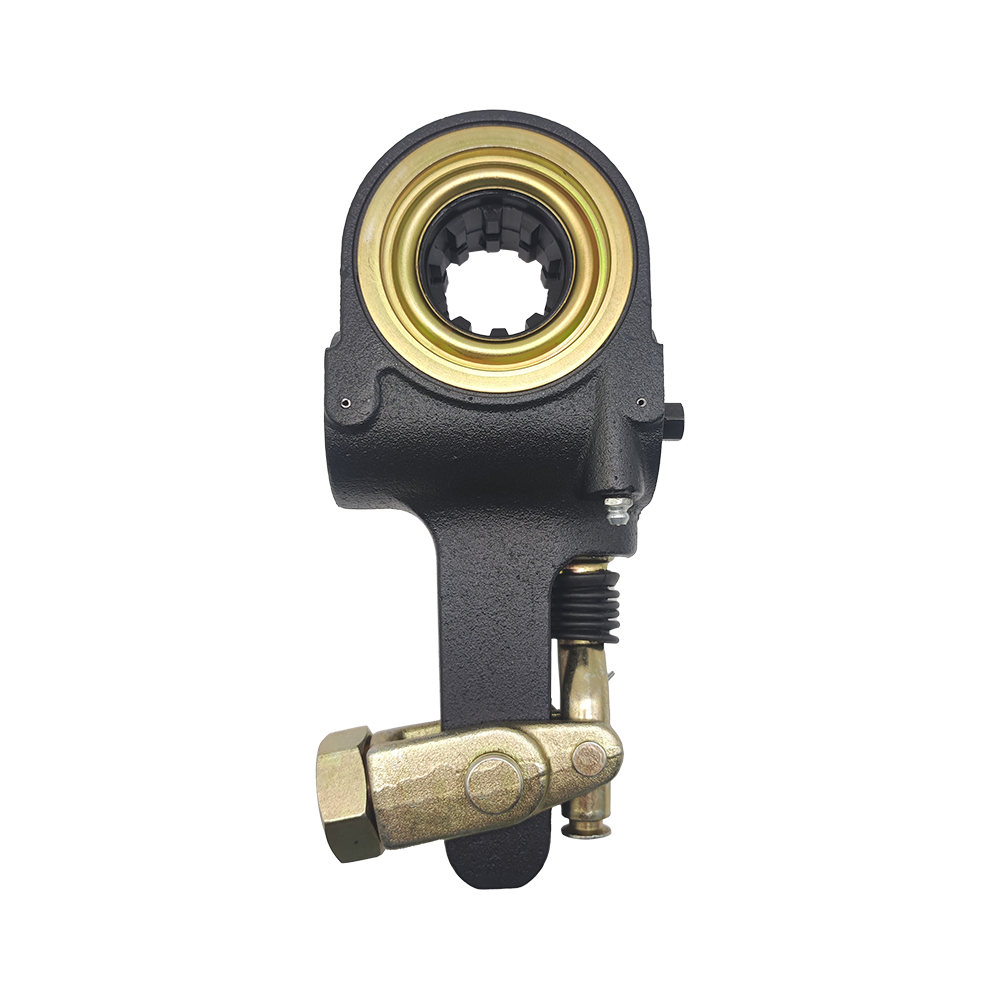
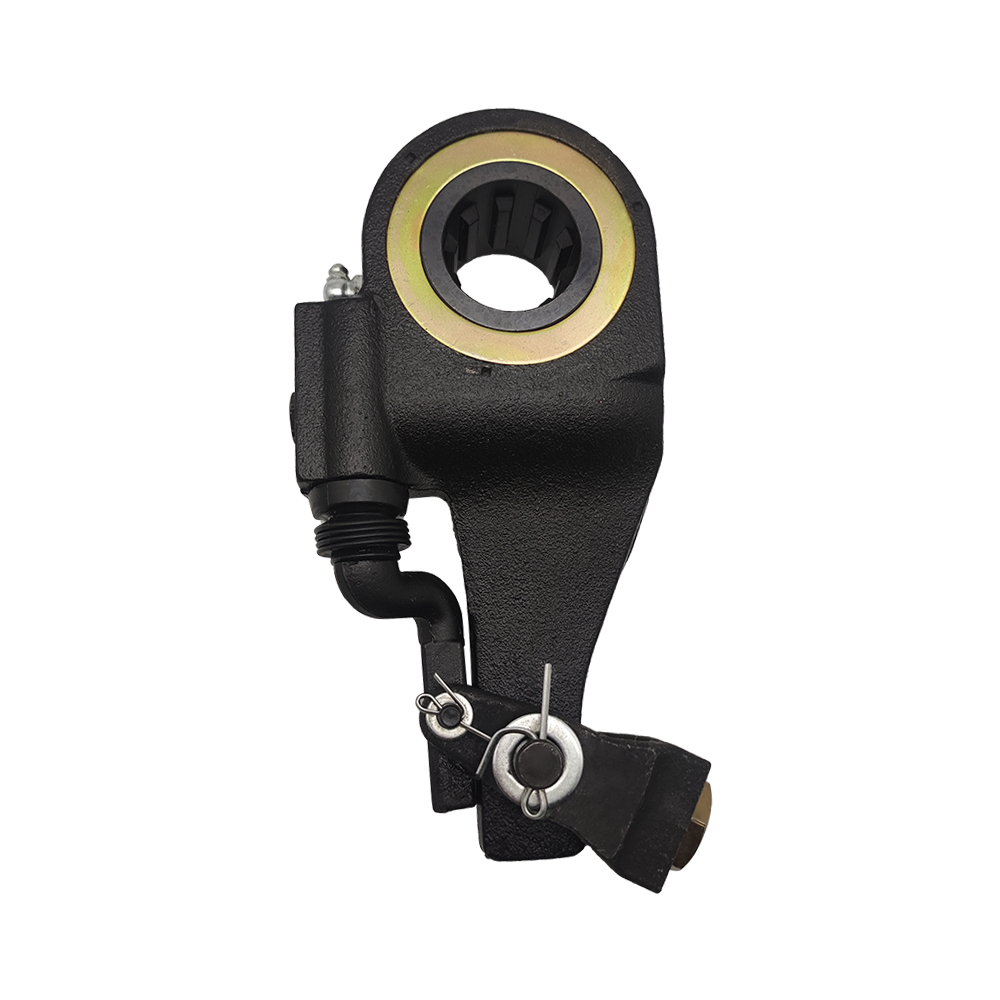
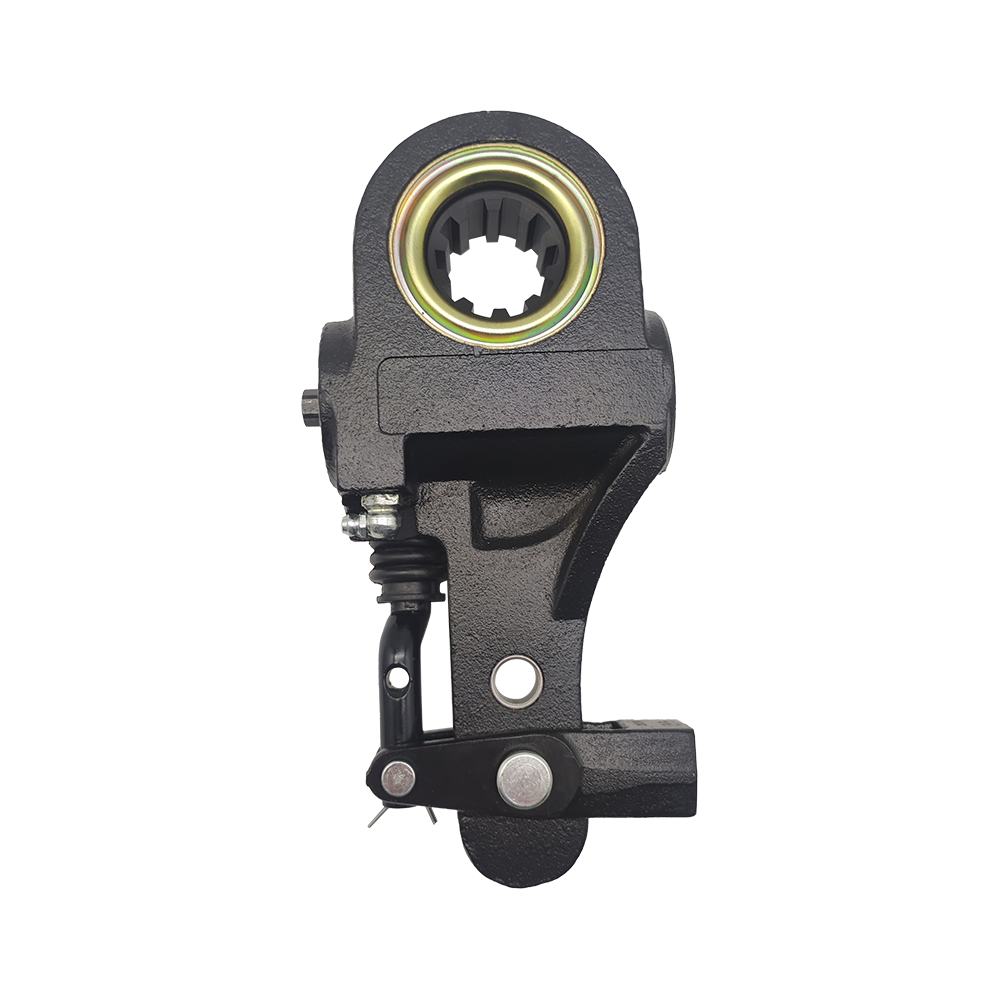
A manual slack adjuster is essentially a worm-and-wheel gear inside a cast housing, with an adjusting bolt that protrudes from the side. To adjust it, the technician turns the bolt with a wrench, which rotates the worm gear and pushes the shoes closer to the drum. The correct procedure is to turn the bolt until the linings just contact the drum, then back it off by a quarter to a half turn so the wheel spins freely.
This is where the discipline comes in. Lining wear happens continuously, but a manual unit only gets corrected when somebody goes under the truck. If that correction does not happen at regular intervals, stroke grows and braking performance degrades quietly. Our detailed explanation of how a manual slack adjuster works covers the adjustment sequence and its effect on brake stroke in more depth.
Where Manual Slack Adjusters Still Make Sense
Manual units have three genuine advantages: they cost less, they are easy for any technician to understand, and they give the maintenance team complete control over brake stroke. For low-mileage trailers, older farm and construction equipment, and fleets that already run a strict stroke-inspection routine, a manual slack adjuster is not a safety problem.
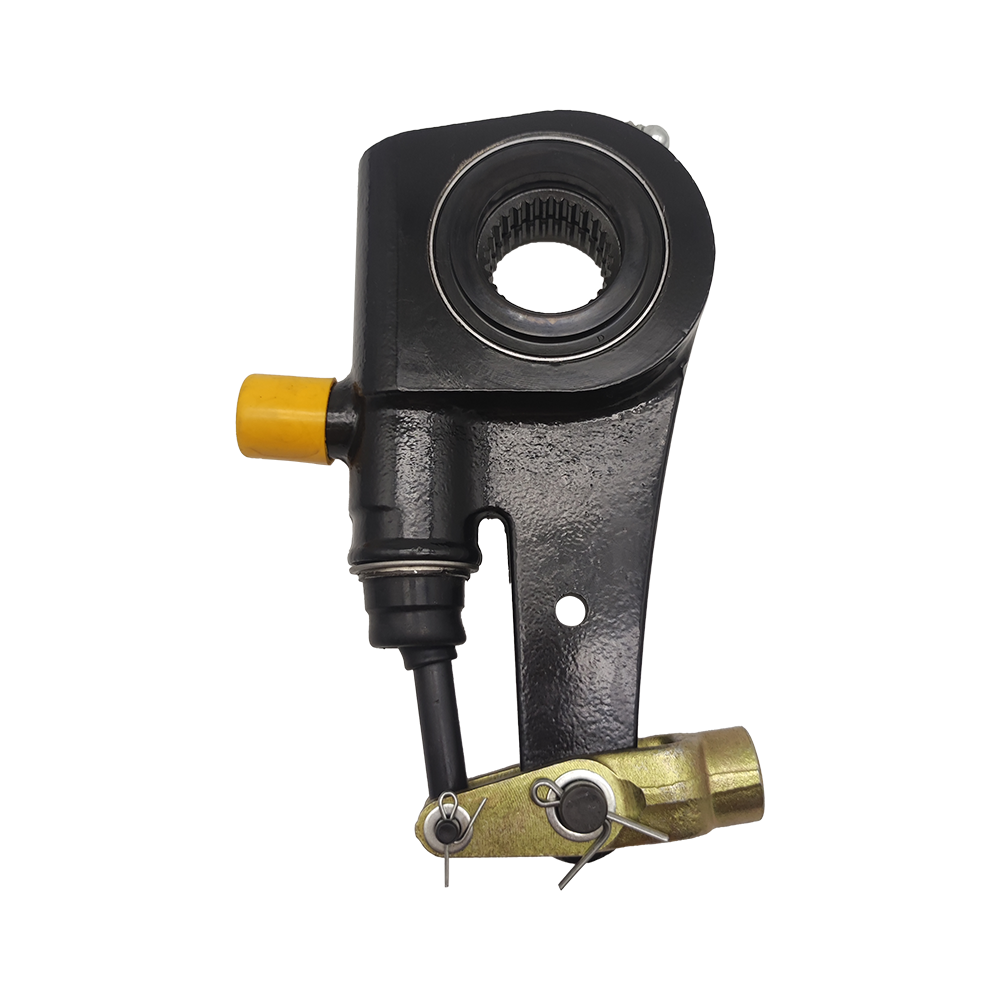
The weakness is inconsistency. With a manual unit, brake performance depends on the last person who adjusted it. Two technicians can adjust the same axle differently, and a busy shop will often skip the job entirely. When an older trailer still carries a manual unit, a common replacement configuration is the 3-hole 10-tooth trailer manual slack adjuster pattern used across many trailer axle builders.
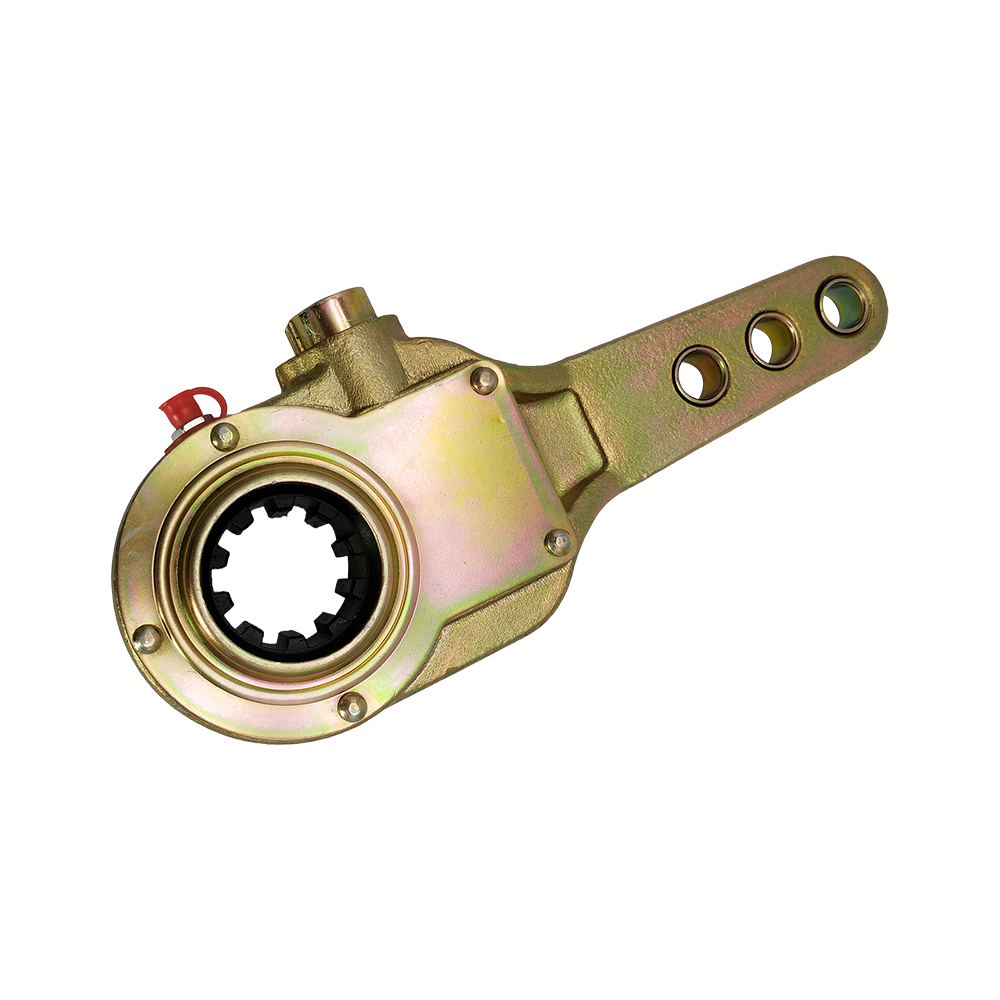 OEM KN47001 3 hole 10 teeth manual slack adjuster for trailer Manufacturers, FacShaoxing Tiean Auto Fittings Manufacturing Co., Ltd is China OEM KN47001 3 hole 10 teeth manual slack adjuster for trailer manufacturers ...View Product →
Automatic Slack Adjusters: Set Once, Inspected Often
How an Automatic Slack Adjuster Works
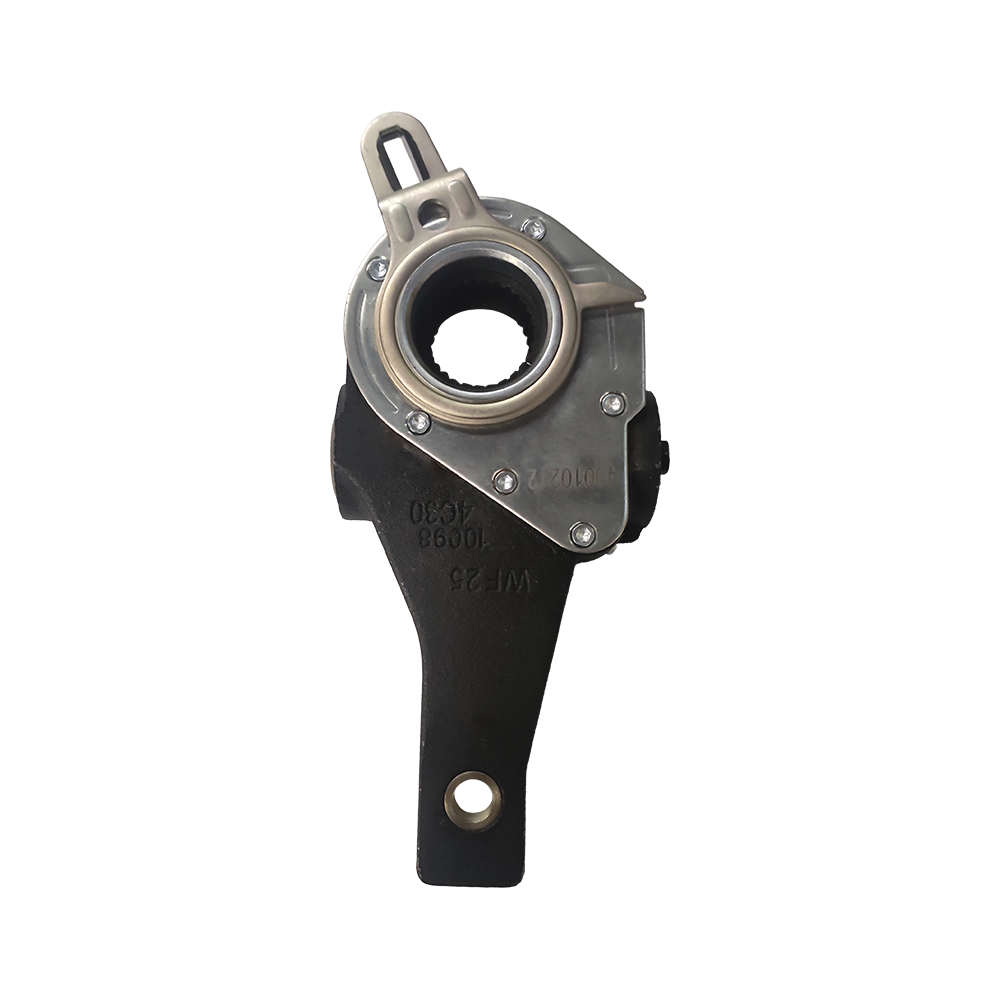
An automatic slack adjuster does the same basic job but adds an internal sensing mechanism. As the brakes are applied, a control arm connected to a fixed bracket measures the actual stroke of the pushrod. When that stroke exceeds a preset threshold, which happens as linings wear, the mechanism rotates the worm gear just enough to return the clearance to its target value. A one-way clutch inside the unit prevents over-adjustment during normal braking.
The critical phrase is "during normal operation." An automatic slack adjuster maintains adjustment, but only when it is installed at the correct angle, connected to a properly sized chamber, and paired with a pushrod stroke inside its design range. It is not a device that fixes a badly assembled brake system; it is a device that quietly compensates for normal wear. Regulatory reviews and field data consistently show that automatic slack adjusters contribute to overall brake system safety mainly because they remove the human tendency to skip manual adjustment.
Strengths and Limitations
The advantages are clear on line-haul trucks and trailers that accumulate high mileage: consistent stroke, fewer unplanned adjustments, and compliance with regulations that now require automatic units on new air-braked vehicles in North America and many other regions.
The limitations show up in the field. Automatic units cost more, they must be fitted with the correct spline count and bolt pattern, and they are sensitive to installation mistakes. A misaligned control arm or an undersized chamber will make an automatic unit over-adjust or under-adjust, which is why many technicians blame the component when the real problem is installation. For trailer fleets, a common fitment is the 25-teeth 3-holes AA1 trailer automatic slack adjuster, which matches the standard trailer axle pattern used across the aftermarket.
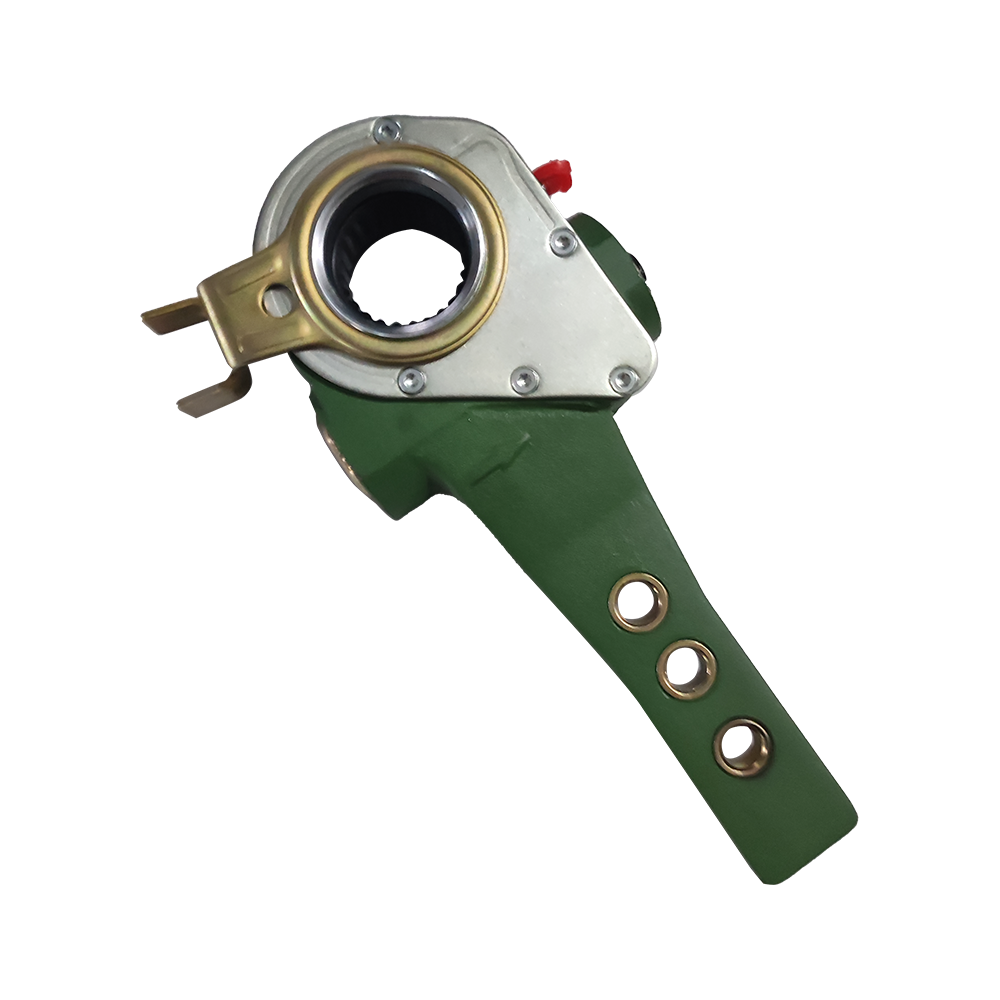 OEM 79863 AA1 trailer automatic slack adjuster 25 teeth 3 holes heavy duty truckShaoxing Tiean Auto Fittings Manufacturing Co., Ltd is China OEM 79863 AA1 trailer automatic slack adjuster 25 teeth 3 holes heavy duty t...View Product →
Automatic vs Manual Slack Adjusters at a Glance
| Factor | Manual Slack Adjuster | Automatic Slack Adjuster |
|---|---|---|
| Adjustment method | Manual wrench on adjusting bolt | Self-adjusting, stroke-sensing mechanism |
| Inspection needs | Stroke check and adjustment at regular intervals | Stroke check at regular intervals, no routine adjustment |
| Upfront cost | Lower | Higher |
| Diagnostic complexity | Simple, easy to verify | Moderate; installation errors mimic component failure |
| Regulatory position | Limited to older equipment in regulated markets | Required on new air-braked vehicles in many regions |
| Best suited for | Low-mileage trailers, older trucks, disciplined in-house fleets | Line-haul trucks, trailers, buses, mixed-driver fleets |
How to Tell a Manual from an Automatic on the Vehicle
One of the most common questions from technicians is how to identify the type without pulling the wheel. A useful field rule is that manual slack adjusters usually have a visible adjusting bolt with a hex head and, in many designs, a pawl and lock spring that must be released before the bolt can be turned. Automatic units generally enclose the adjusting mechanism inside the housing and add an external control arm that runs from the slack adjuster body to a fixed bracket or anchor point on the axle.
Another clue is the vehicle's age and history. If the truck or trailer was built after automatic slack adjusters became standard in its market of origin, a manual unit on the axle usually means a previous replacement. In North America, a manual unit on a late-model air-braked trailer is a red flag that the adjuster was swapped at some point, and not always for a good reason.
Which Slack Adjuster Should You Choose?
The choice depends on your maintenance environment, not on brand loyalty or habit.
- Choose an automatic slack adjuster when the vehicle racks up high mileage, the fleet relies on varied drivers, or the operation must pass brake adjustment inspections with minimal downtime. This is the default for line-haul trucks, highway trailers, and buses.
- Choose a manual slack adjuster when the vehicle is older, moves few miles per year, or the shop has a documented routine for checking stroke. Manual units also remain common in regional markets where regulation has not pushed automatic fitment as far.
Whichever type you pick, the replacement must match the original geometry exactly. Spline count and diameter, the number of mounting holes, arm length, and the direction of the adjusting bolt all matter. A unit designed for a European truck will not swap onto a Japanese or Korean axle without the correct cross-reference. European MAN applications, for instance, frequently use the S-ABA automatic slack adjuster for MAN trucks pattern, while Japanese and Korean vehicles rely on their own tooth and spline configurations.
For fleets that want to keep the existing manual setup, or that are replacing a failed automatic with a newer automatic unit, the same measuring rules apply: confirm the spline, the bolt circle, and the arm length before ordering.
Common Mistakes During Replacement and Adjustment
Most slack adjuster failures, especially with automatic units, trace back to installation rather than the component itself. The recurring field issues are:
- Installing the wrong spline count or mounting pattern; a unit will physically fit a close but incorrect spline, then strip under load.
- Setting the pushrod stroke at the wrong length; both types need an initial stroke check after installation, and automatic units are designed around a specific stroke window.
- Failing to lubricate the adjusting bolt and worm gear, which causes freeze-up and makes manual units impossible to adjust in the field.
- Reusing a worn brake chamber with a new adjuster; an out-of-stroke chamber will defeat even a new automatic unit.
- Skipping the post-installation stroke measurement; a single measurement takes five minutes and prevents most adjustment-related complaints.
If a brake adjuster starts giving trouble, checking these areas first will avoid replacing a good unit. It is also worth reviewing the maintenance tips that extend the lifespan of a brake adjuster, since lubrication and stroke management do more for longevity than any brand choice.
Final Thoughts
Automatic slack adjusters win on consistency, which is why they are standard equipment on new air-braked vehicles. Manual slack adjusters win on simplicity and cost, which keeps them relevant on older and low-mileage equipment. The right answer for a specific axle comes down to how the vehicle is used, how the maintenance program is run, and how precisely the replacement part matches the original specification.
Neither type is inherently better in every scenario. A disciplined shop can keep a manual unit safe and compliant, and a badly installed automatic will underperform a well-maintained manual. Measure the stroke, verify the spline and mounting pattern, and choose the design that fits the fleet's real operating conditions.