English
 русский
 Español
 Deutsch

Content
Automatic Slack Adjuster Types: Clearance-Sensing vs. Stroke-Sensing Explained
The two adjusters can share the same S-cam shaft yet read the brake in completely different ways. Pick the wrong family and the adjustment curve changes, even if the part number looks familiar.
When a twelve-year-old trailer rolls into the bay with a left-rear brake reading hot on the infrared thermometer, the first question is rarely “which brand” and almost always “which type.” The automatic slack adjuster waiting on the shelf may look identical to the one it replaces, but if it uses a different sensing philosophy, the brake will behave differently for the rest of its service life.
Automatic slack adjusters divide into two main families: clearance-sensing and stroke-sensing. Everything else in the specification — spline count, mounting teeth, arm length, left-hand or right-hand orientation — is application packaging around those two internal logics. Identify the sensing type first, then measure the mechanical interface, and the correct part number follows.
The Two Core Sensing Philosophies
Clearance-sensing adjusters monitor the gap between the brake lining and the drum. When the gap exceeds the internal threshold, the adjuster takes up slack in small, immediate increments. This gives a fast response to lining wear, but it carries a thermal weakness: a hot drum expands, the sensor reads the change in gap as wear, and the unit can compensate before the system cools down.
Stroke-sensing adjusters measure how far the pushrod travels when the brake is applied. When travel exceeds the calibrated limit, a one-way clutch advances the worm gear and resets the running clearance. Because stroke changes far less with drum temperature than clearance does, stroke-sensing units handle heat far more gracefully. That is why they dominate European and Asian commercial-vehicle platforms.
| Characteristic | Clearance-Sensing | Stroke-Sensing |
|---|---|---|
| Measured signal | Lining-to-drum gap | Pushrod stroke length |
| Response to lining wear | Direct, incremental | After stroke threshold |
| Response to hot drums | Can over-adjust | Generally tolerant |
| Typical housing style | Compact cast housing | Housing with integrated worm and clutch |
| Common applications | American trucks and trailers | European trucks, Japanese and Korean buses |
This is why a stroke-sensing arm specified for a Scania cannot be casually exchanged for a clearance-sensing equivalent. The adjustment logic, the internal clutch, and the gear ratio are all calibrated together, which is exactly why the choice of type matters for overall brake system safety.
AA1 and S-ABA: The Two Aftermarket Platforms
In replacement catalogs, two platform names appear constantly: AA1 and S-ABA. AA1 descends from the European stroke-sensing design carried on Scania, Hino, Daewoo, MAZ, and trailer axles, with reference families such as 72660, 79250, and PT4006. S-ABA is the European OE-style platform used on Mercedes-Benz and MAN trucks, identified by references such as 80009, 80180, and 80226. Both are stroke-sensing designs, but their housings, worm covers, and spline interfaces are not interchangeable.
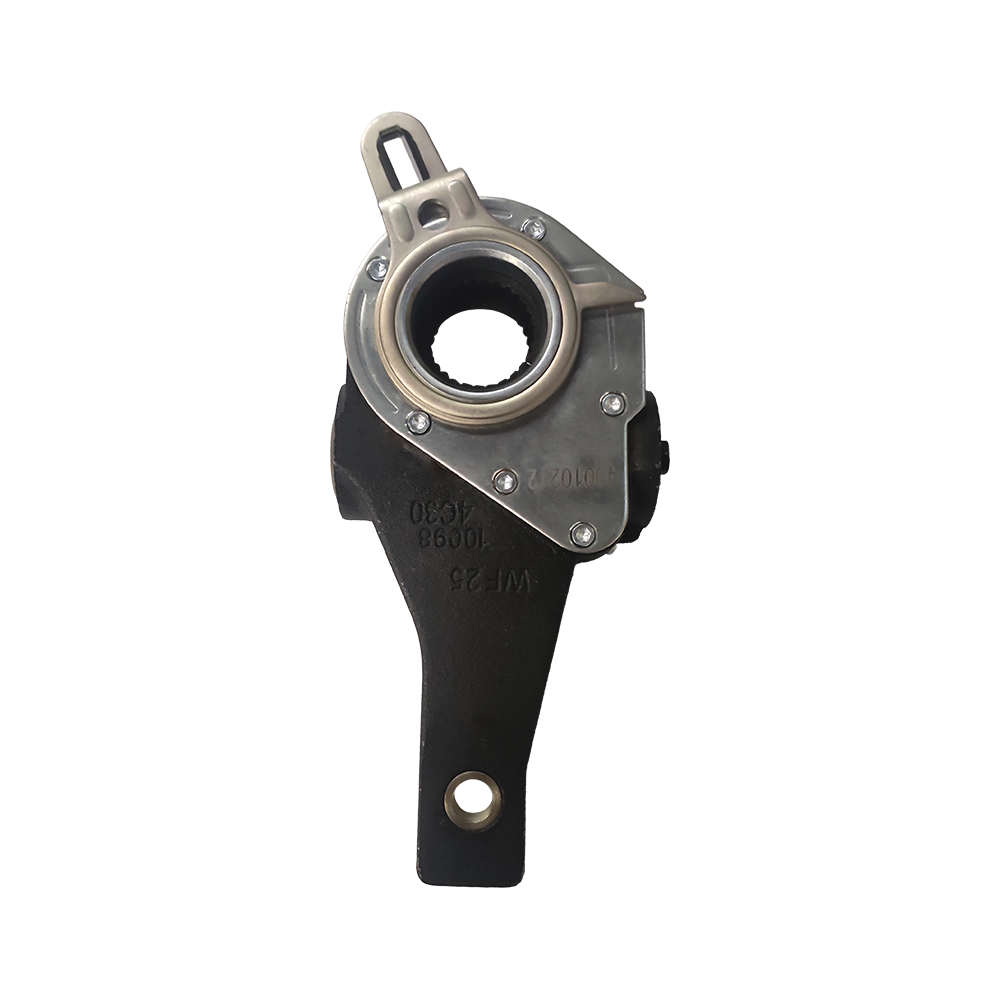
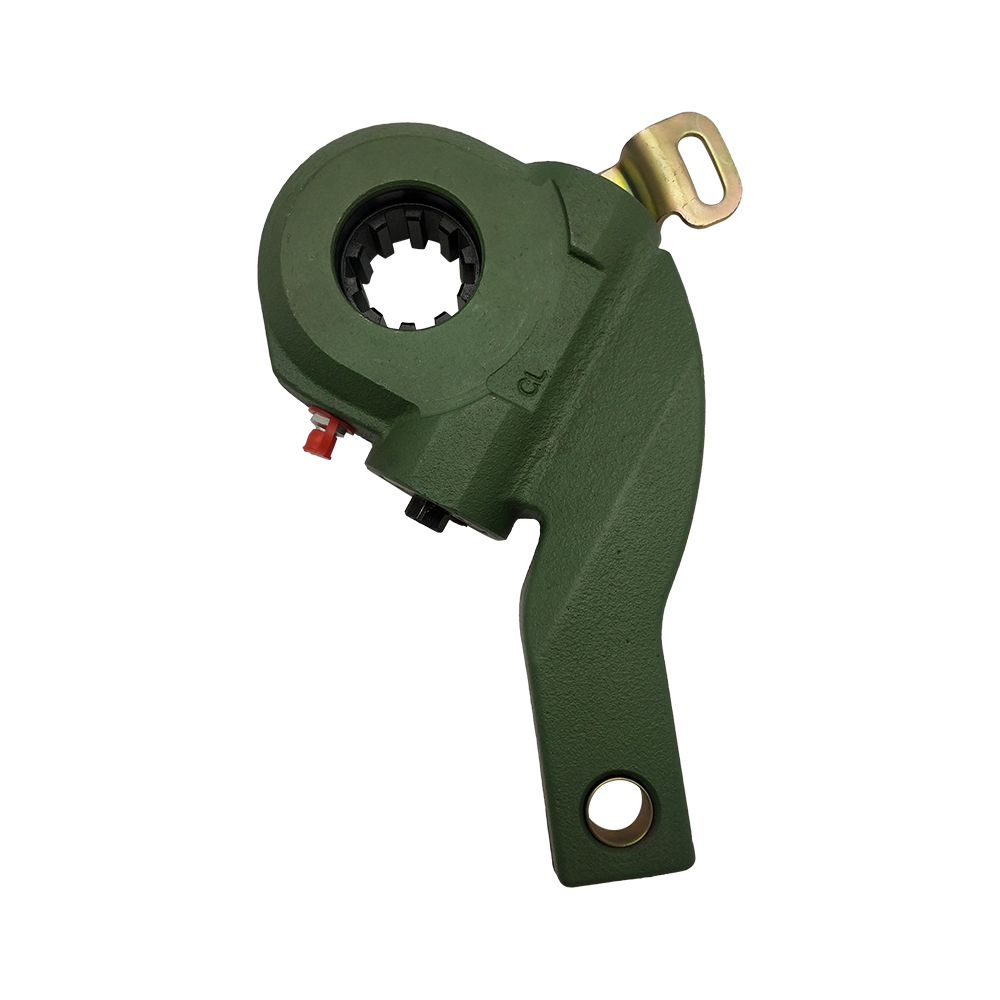 AA1 Automatic Slack Adjuster Catalog by Vehicle MarketBrowse AA1-series slack adjusters for Scania, Hino, Daewoo, MAZ, and trailers, with cross-references to 72660 and PT4006 references to precisely match original units.View Product →
Suppliers such as Shaoxing Tiean manufacture both platforms, which is typical for this segment. The choice is never about availability; it is about matching the original unit. A Scania with a 72660 arm takes an AA1-series replacement. A Mercedes-Benz with an 80009-type arm takes an S-ABA-series replacement. Physically bolting the wrong platform in place can work, but the internal calibration will not hold the correct clearance, and lining life will suffer.
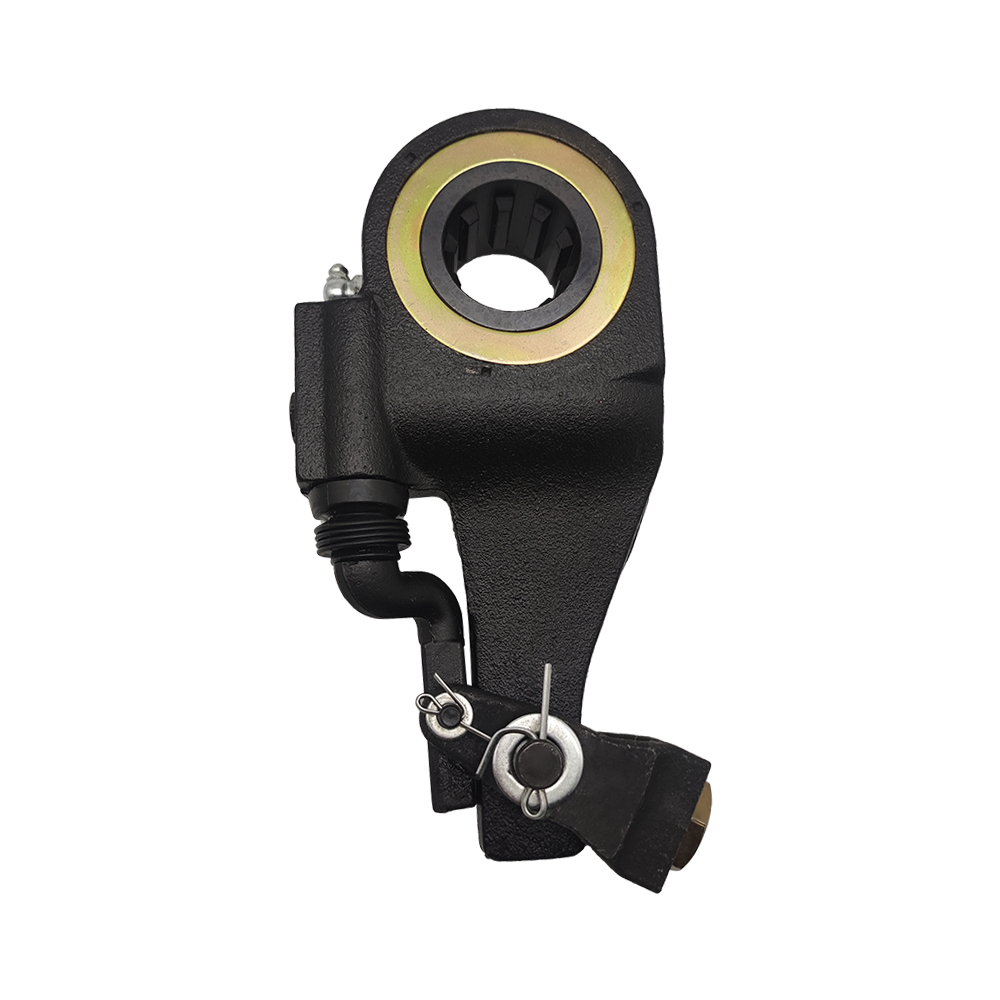
 S-ABA Slack Adjuster Selection for European and Japanese TrucksFind S-ABA arms for Mercedes-Benz, MAN, HINO, Daewoo, and HOWO, sorted by spline and tooth counts to ensure correct fitment after platform identification.View Product →
Splines, Teeth, and Arm Length: The Mechanical Check
Once the sensing platform is confirmed, the selection narrows to mechanical fit. The spline count defines the interface with the camshaft: 10-spline 1.5-inch is the standard for North American heavy trucks, while European and Japanese chassis use toothed patterns such as 24-tooth and 26-tooth. Trailer units commonly use the 3-hole mount with 10, 25, or 28 teeth, depending on the axle manufacturer.
| Interface | Applications | Reference Examples |
|---|---|---|
| 10 spline, 1.5 in diameter | American trucks and trailers | AS1132, SA21103 |
| 24-tooth | Japanese trucks, Hino S-ABA | 43419Z01A / B |
| 26-tooth | European S-ABA, Mercedes-Benz | 80226 |
| 10-tooth, 3-hole | Trailer manual adjusters | KN47001 |
| 25-tooth, 3-hole | Heavy-duty trailer AA1 | 79836, 79863 |
| 28-tooth, 3-hole | Trailer manual and ASA | KN47071 |
Arm length is the second critical dimension. It is measured from the center of the spline bore to the center of the clevis pin hole. A 6-inch arm with a 10-spline 1.5-inch bore is among the most common North American replacement arms, usually cataloged under the BD series; the 65172 is a standard example of that geometry.
After the sensing type is confirmed, the arm becomes pure geometry: splines, teeth, and one center-to-center measurement. Everything else in the catalog is a variation on that theme.
Regional Variants and the Cross-Reference Habit
Asian and Russian fleets add a second layer of complexity. Korean buses on the Daewoo platform use reference arms from the 72779 and 79251 series. Hino trucks take AA1 references such as S474802060, while Hino S-ABA units use the 43419Z01 left/right pair. MAZ and PAZ chassis rely on the PT4006 and PT4007 platforms, with their own worm and spline specifications. TATA trucks in India still run manual slack adjusters almost exclusively in the replacement market, a reminder that the automatic upgrade is not universal.
North American fleets are served by the BD, RW, AS, and CB series, which cover clearance-sensing and self-adjusting configurations with 10-spline bores and arm lengths from 5 to 6.5 inches. The series designation itself encodes the geometry: AS indicates a standard 10-spline 1.5-inch arm, while RW covers self-adjusting variants. Suppliers catalog these arms by series, which makes cross-referencing simpler than memorizing individual OEM numbers.
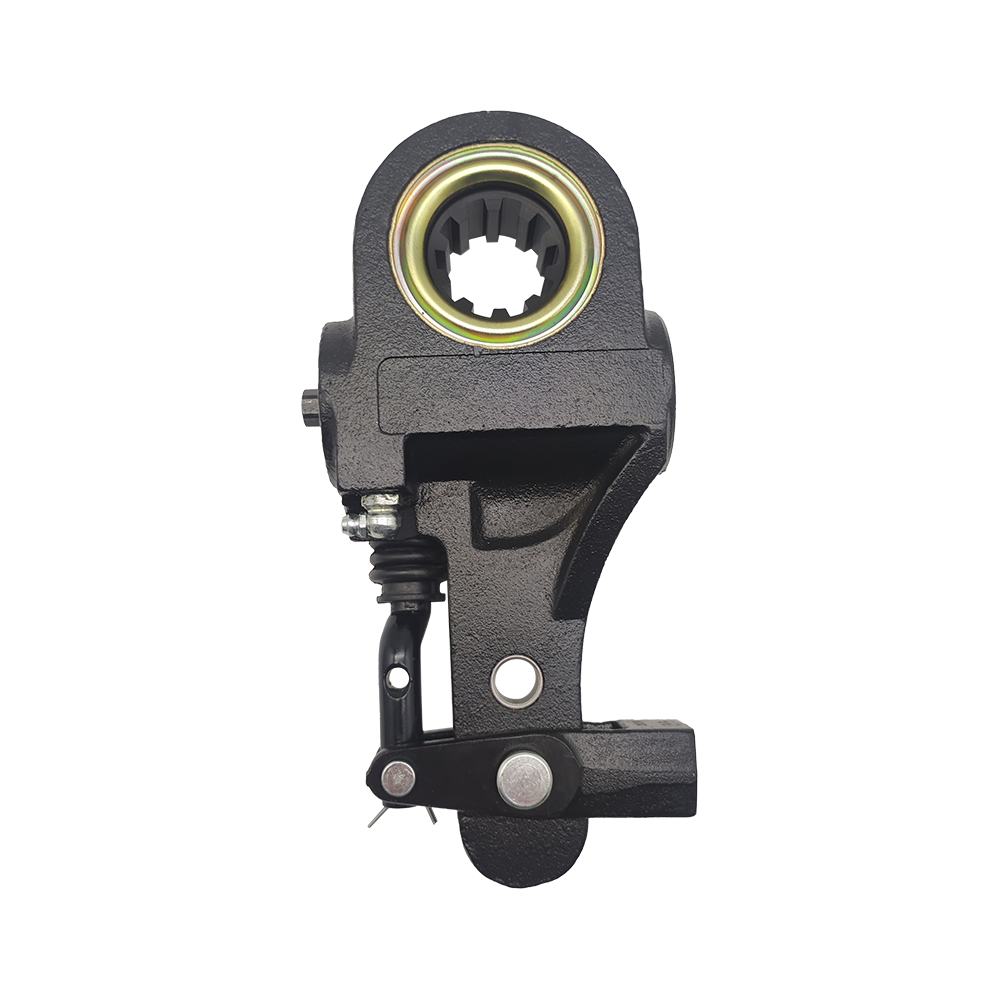
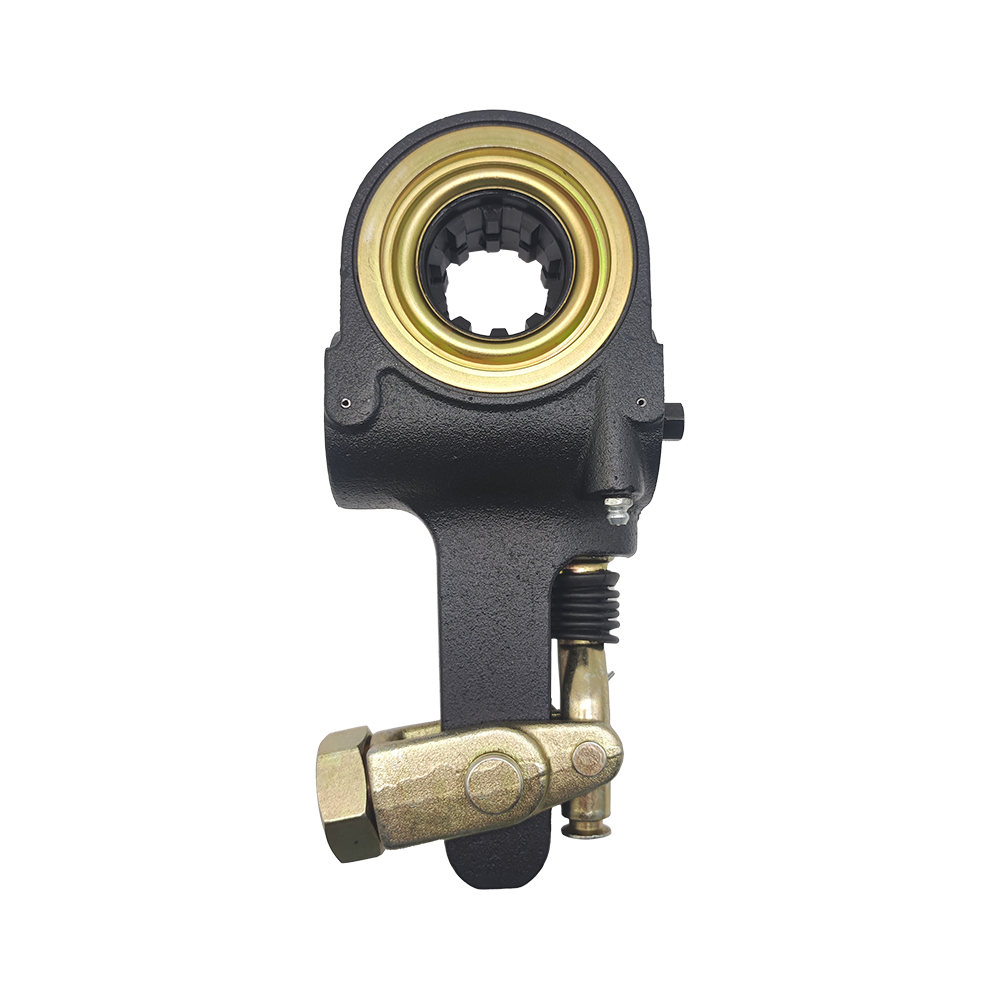 North American Slack Adjuster Series for Fleet ReplacementReview AS, BD, RW, and CB series arms with 10-spline bores and 5–6.5-inch lengths, including Bendix and Meritor references, for straightforward cross-referencing.View Product →
Trailer axles are a category of their own. Because a trailer brake operates with less thermal mass than a tractor brake, the adjuster must hold clearance over long, steady applications. Heavy-duty trailer AA1 arms such as the 79836 and 79863 use 25-tooth 3-hole mounts, and the S-ABA trailer family uses the same 3-hole pattern with its own worm geometry. Never assume a trailer arm will fit a truck axle simply because the holes line up.
What to Verify Before You Order
Three measurements prevent most ordering mistakes, and they should be taken in this order:
- Sensing type. Is the original a clearance-sensing or stroke-sensing unit? Look for the manufacturer’s part number on the housing and confirm which family it belongs to.
- Interface. Count the splines or teeth with the arm off the shaft, and note the mounting pattern (3-hole, 4-hole, or splined bore).
- Arm length and orientation. Measure bore center to clevis center, and confirm left-hand or right-hand side.
Choose the sensing philosophy first, then the platform, then the spline and arm length. Match all three layers to the original installation, and an automatic slack adjuster will quietly hold the brakes in adjustment for hundreds of thousands of kilometres — which is exactly what it is supposed to do.